
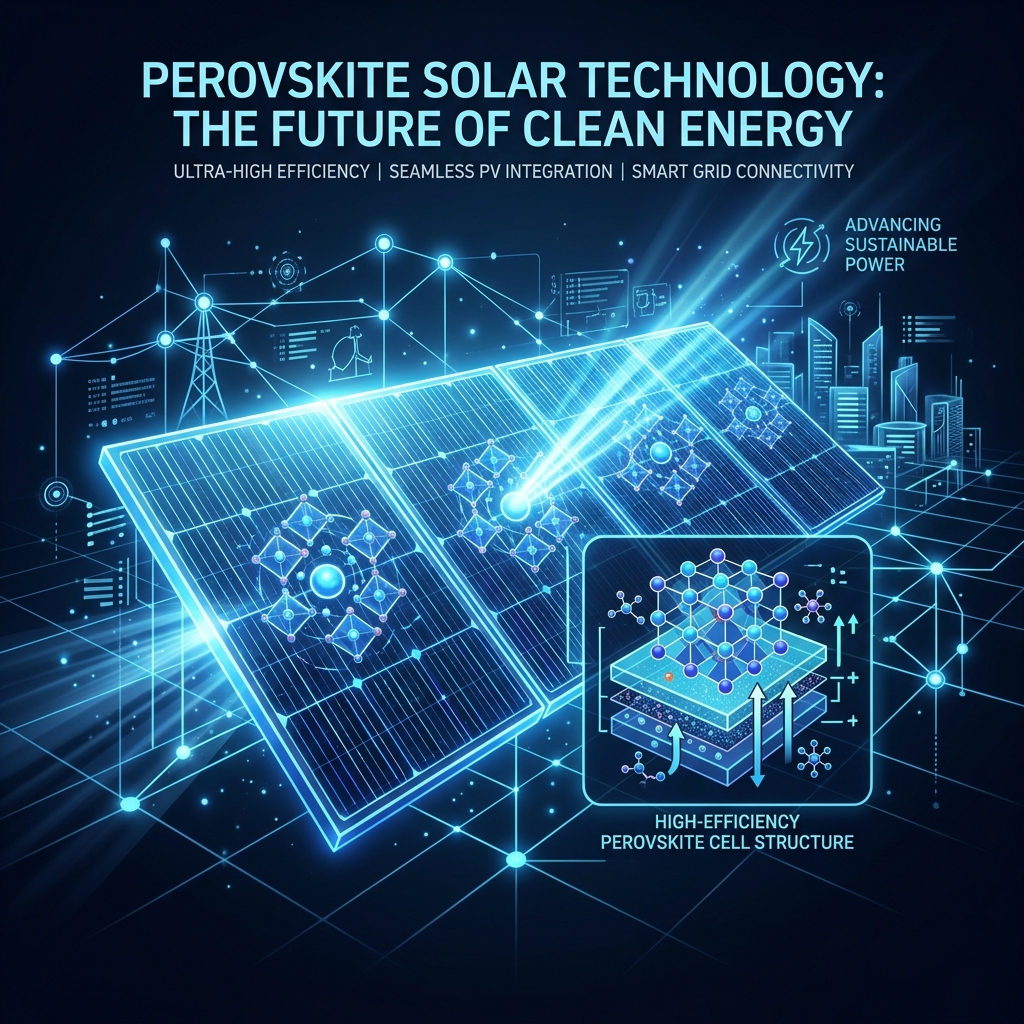
Silicon has dominated the solar photovoltaic (PV) market for decades, but a new class of materials is poised to redefine efficiency limits. In 2026, perovskite solar cells are moving from laboratory research to commercial manufacturing.
What are Perovskite Solar Cells?
Perovskites are synthetic materials with a unique crystalline structure that enables efficient absorption of sunlight. While traditional silicon cells have a theoretical efficiency limit of around 29%, layering perovskite on top of silicon (creating a "tandem cell") allows systems to exceed 33% efficiency. This increase in efficiency significantly reduces the physical space required for solar installations.
"Tandem perovskite cells represent the largest technological leap in photovoltaic history. They allow us to generate more energy from the same surface area, lowering installation costs."
Key Advantages of Perovskites
The solar industry is shifting towards perovskite technology due to several factors:
- Spectral Adaptability: Perovskites can absorb different wavelengths of light than silicon, maximizing total energy capture throughout the day.
- Flexible Form Factors: Liquid precursor solutions allow perovskites to be printed on flexible, thin plastic sheets, enabling solar windows.
- Lower Embodied Carbon: Manufacturing perovskite cells requires significantly lower temperatures than refining high-purity silicon.
PV Laboratory Training at Nova Haven
Nova Haven's Clean Energy students study photovoltaic physics first-hand. In our lab, they measure efficiency losses across silicon and tandem test cells, calculate power curves, and configure solar charge controllers. By understanding the chemical and electrical principles of next-generation panels, they prepare to design high-yield residential and commercial solar installations.