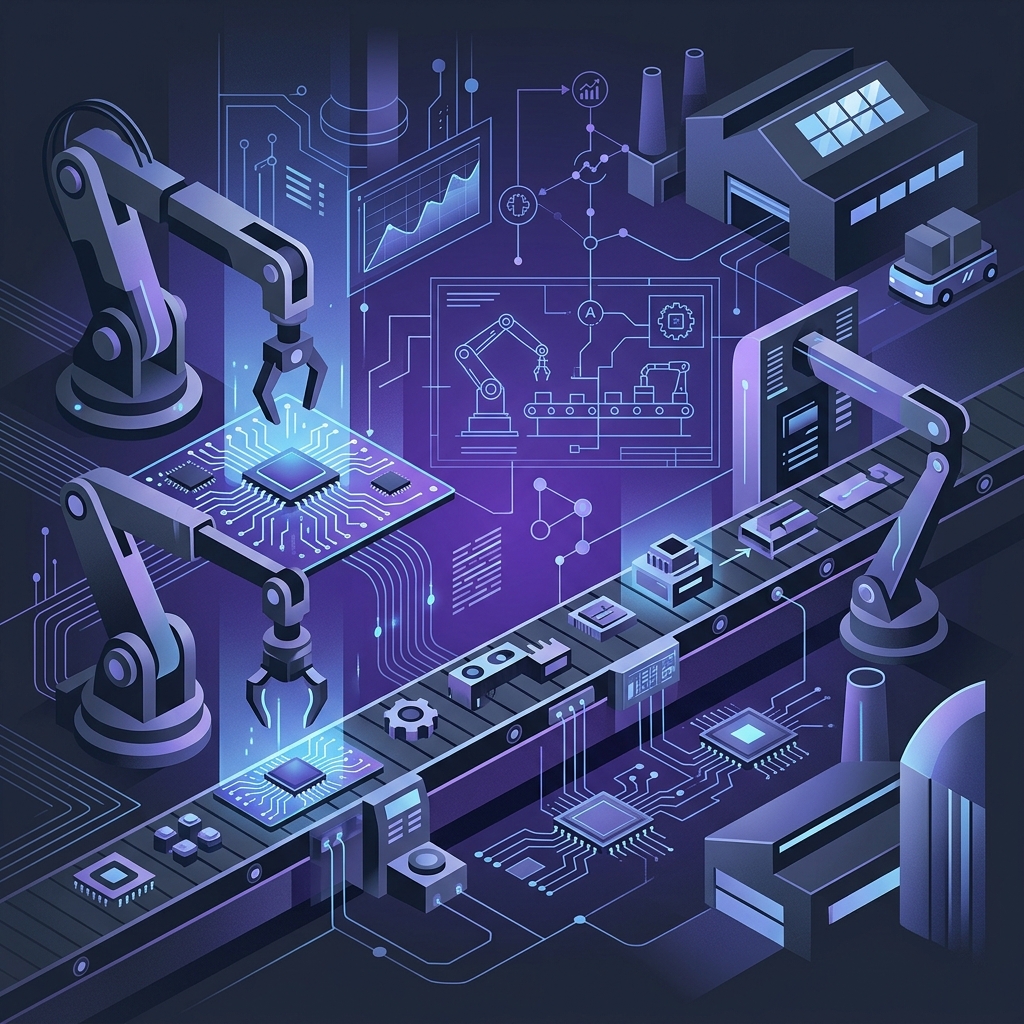
Industrial automation is undergoind a software revolution. Modern factories are no longer filled with isolated mechanical arms repeating hardcoded cycles. Instead, automated assembly floors are intelligent, sensor-equipped systems running under active robotic operating software. This transition has birthed a massive demand for a new technical role: the Robotics & Integration Technician.
The Intersection of Software & Steel
Unlike traditional mechanical maintenance workers or pure software engineers, a Robotics Technician operates at the boundary where software meets physics. When an automated line encounters a bottleneck, the technician must diagnose whether the fault lies in a sensor circuit, a motor controller, or in the ROS2 system configurations. This requires a unique set of hardware-software skills.
"The modern automated line is an active network. Technicians must understand how to trace signal currents with multimeters and debug communication interfaces with network analysis packages simultaneously."
The Emerging Skillset
Industrial automation leaders now look for entry-level candidates with:
- Microcontroller Programming: Writing firmware in C++ or Python to interface with physical encoders, actuators, and motor drives.
- ROS2 Architecture: Designing publish-subscribe communication nodes to manage telemetry and sensor feedback from robotic units.
- Circuit Diagnoses: Using diagnostic instruments to measure voltages, test continuity, and isolate electrical hardware faults.
The Opportunities Ahead
Careers in smart manufacturing represent some of the fastest-growing and highest-paying technical roles that do not require a traditional four-year college degree. Organizations like Nova Haven are bridging this gap by hosting training labs with real mechanical parts, ROS2 control platforms, and diagnostic toolkits. By equipping youth with hands-on hardware competencies, we are enabling them to secure long-term career stability in an automated economy.