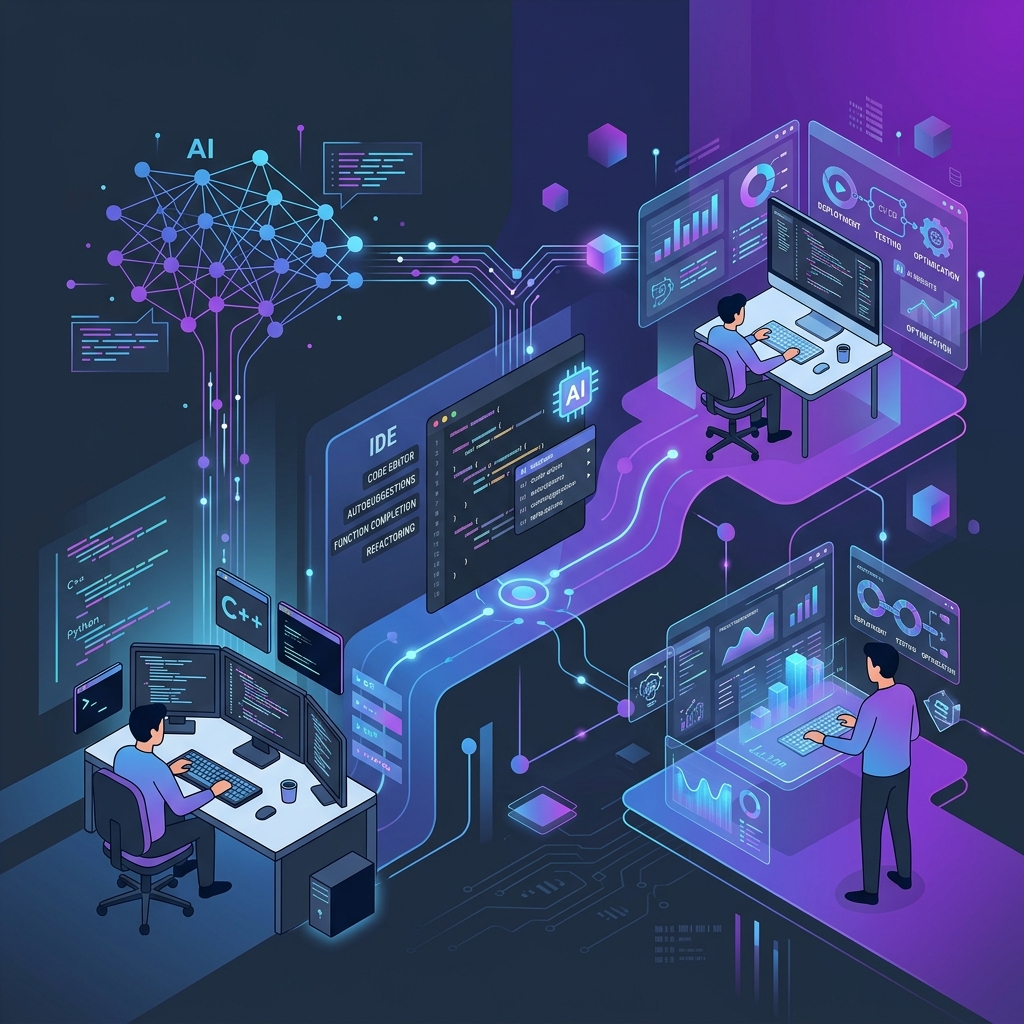
The year 2026 marks a watershed moment in software engineering. With the rapid deployment of autonomous AI coding agents and advanced generative models, the definition of an "entry-level developer" has shifted. Today, raw coding syntax is no longer the primary bottleneck for software production. Instead, a new set of system-design, debugging, and AI-prompting competencies are redefining workforce integration.
The Evolution of the Developer Role
Historically, entry-level engineers spent their first few years writing boilerplate code, basic CRUD operations, and translating specifications into lines of code. AI tools now automate these repetitive steps in seconds. Today's entry-level engineers must act more like system overseers, reviewing generated blocks, writing integration tests, and orchestrating deployment pipelines.
"The modern engineer is not just a coder, but an editor and a systems integrator. The ability to coordinate multiple codebases, trace logic flows, and debug complex, AI-assisted integrations is now the standard requirement."
Core Competencies in High Demand
Based on our quarterly survey of industry recruiters, the technical skillsets in highest demand now center around:
- Agentic Orchestration: Understanding how to structure multi-agent workflows, deploy local language models, and configure context pipelines.
- Verification & Testing: Deep familiarity with automated testing libraries, continuous integration (CI) workflows, and manual regression checks.
- Security Auditing: Tracing code logic to catch security vulnerabilities, package dependency bugs, or hallucinations introduced by auto-generation.
Re-skilling at Nova Haven
At Nova Haven, we have updated our curriculum in partnership with QuantumMind Academy to address this shift. Rather than teaching syntax in isolation, our students work side-by-side with professional AI coding assistants. They are evaluated on their architectural decisions, system tests, and debugging velocity. By training our students to operate at a higher abstraction level, we prepare them to enter the technical workforce as productive, high-value contributors from day one.