
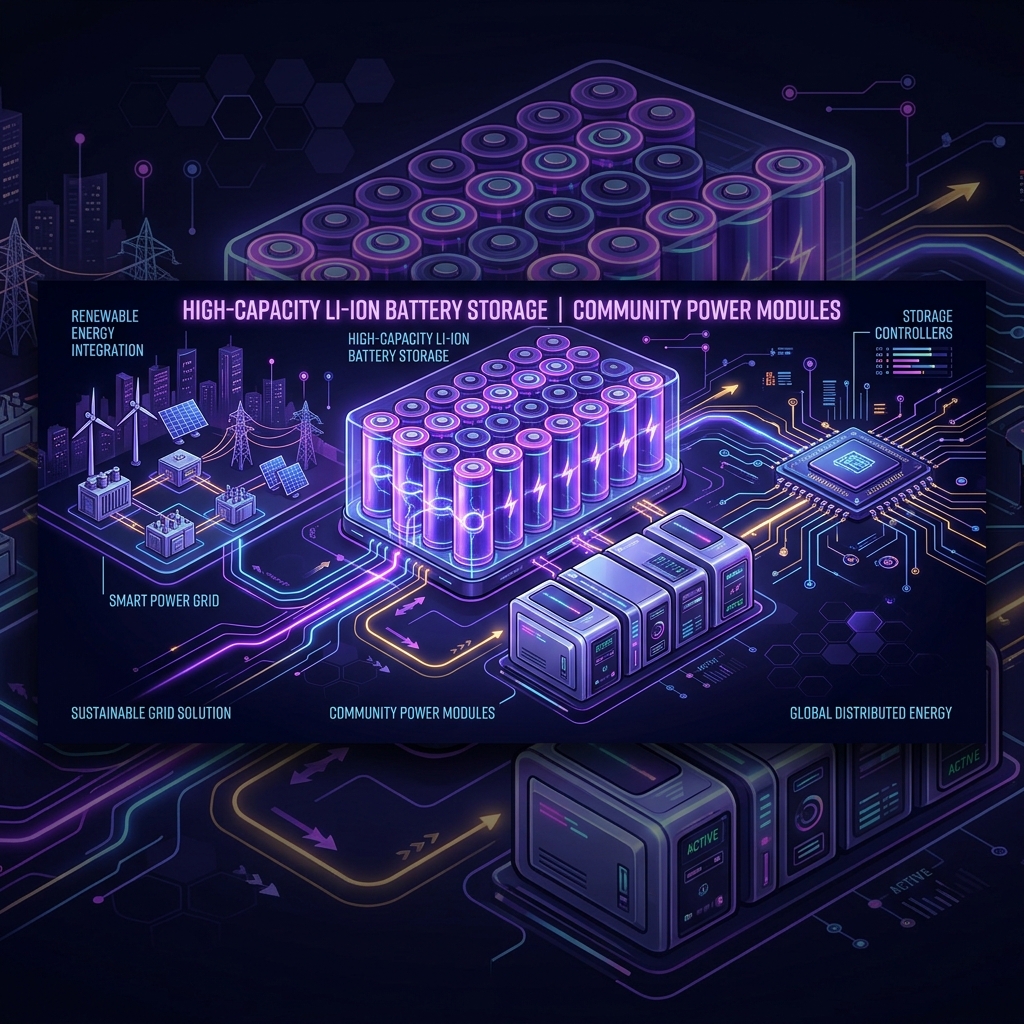
Generating clean energy is only half the battle. Storing that power to ensure reliability when the sun isn't shining or the wind isn't blowing is the true bottleneck of the renewable transition.
The Role of Energy Storage Systems (ESS)
Battery storage technology is the link that connects generation with consumption. By storing excess daytime solar energy, lithium-ion battery modules can supply communities during peak evening demand. In 2026, new chemistries like sodium-ion and iron-flow batteries are also emerging, offering cheaper, non-flammable alternatives for stationary community power grids.
"Grid resilience requires intelligent storage. Modern battery management systems (BMS) orchestrate cell balances to protect battery health and prevent failures."
Leading Storage Technologies in 2026
The modern utility market leverages a diverse portfolio of storage systems:
- Lithium Iron Phosphate (LFP): Now the standard for stationary storage, LFPs offer long cycle lives and high thermal stability compared to cobalt-based cells.
- Iron-Flow Batteries: Ideal for long-duration grid storage, using non-toxic iron and water electrolytes to deliver power over 12+ hours.
- Smart BMS Controllers: Embedded microcontrollers monitor state-of-charge (SoC) and state-of-health (SoH) metrics to prevent thermal runaway.
Grid Integration Training at Nova Haven
Students in our Clean Energy track work directly with high-capacity battery cells and battery management software. They learn how to balance battery banks, configure hybrid solar inverters, and program telemetry nodes to alert operators to voltage irregularities. This practical skill set is highly sought after by microgrid builders, municipal utilities, and green energy contractors.