
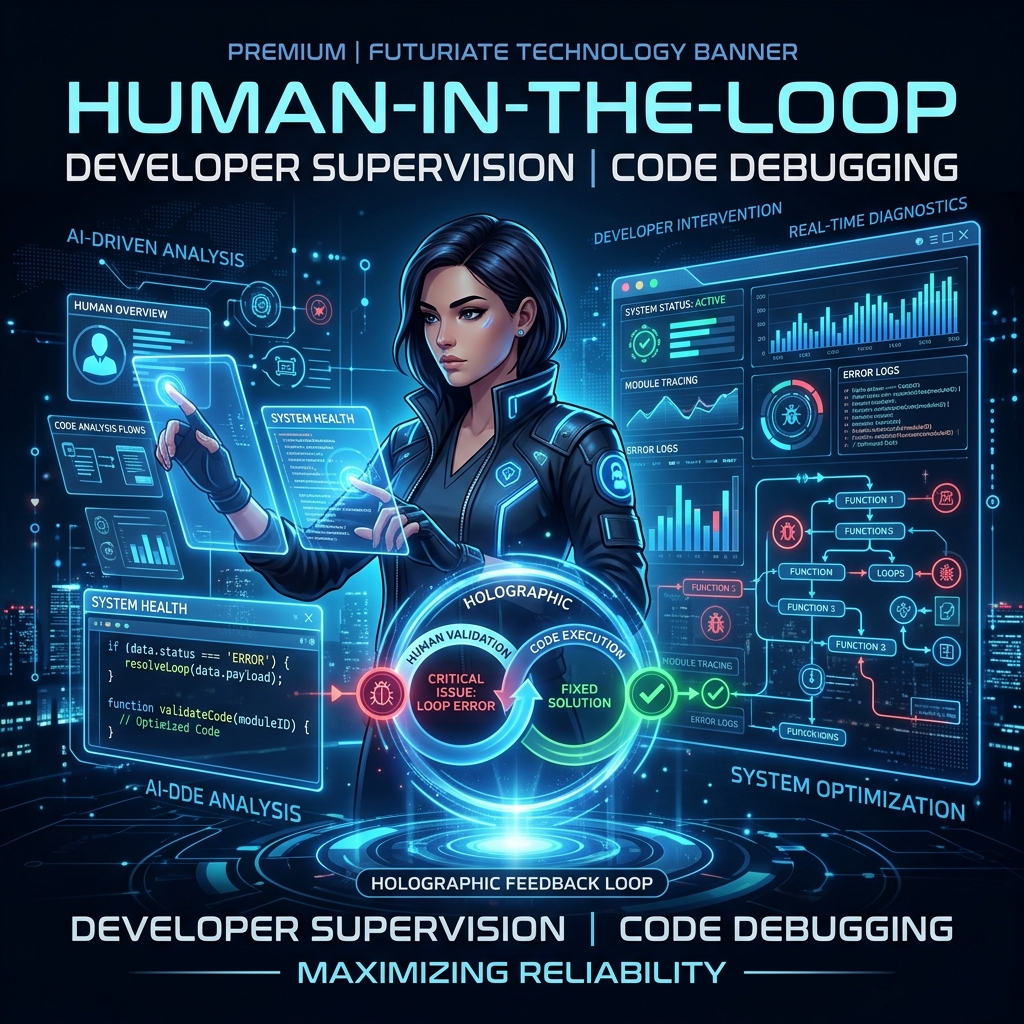
As generative AI tools write increasingly complex code, the value of the developer has shifted from writing syntax to evaluating systems. In an AI-driven environment, critical thinking, logic verification, and human supervision are the ultimate assets.
The Limits of Automation
Generative models excel at pattern matching and syntax generation. However, they lack semantic understanding and contextual reasoning. When tasked with unique requirements, complex logic integrations, or secure API routing, models often generate code that is syntactically correct but functionally broken or insecure. This makes human-in-the-loop (HITL) auditing essential.
"Code generation accelerates speed, but increases risk. The developer's primary role in 2026 is no longer raw speed, but architectural verification and logic auditing."
The Essential Skills of the Modern Auditor
To thrive in this new landscape, engineers must develop specific analytical skills:
- System Design & Architecture: Structuring systems to ensure compartmentalization, meaning errors or hallucinations remain isolated.
- Security and Vulnerability Analysis: Proactively inspecting generated functions for dependency injections, data leaks, or loose credentials.
- Comprehensive Testing: Writing robust integration and unit test suites that validate execution boundaries and handle edge cases.
Syllabus Focus at Nova Haven
Nova Haven, in partnership with QuantumMind Academy, actively trains students to act as system editors rather than passive consumers of AI output. Our testing lab simulates code failures and library bugs, challenging students to trace logic, locate errors, and refactor generated segments. This emphasis on critical reasoning prepares our graduates to lead development teams with confidence.