
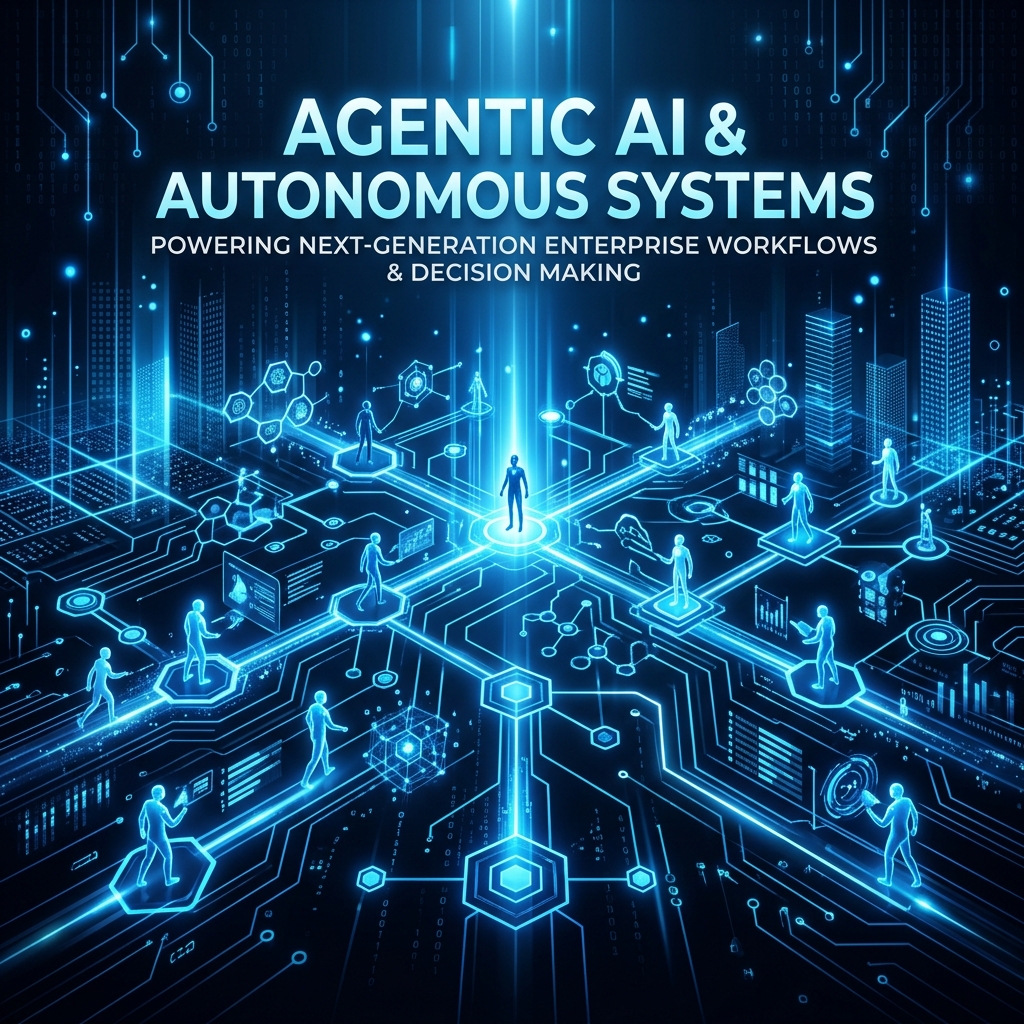
The integration of artificial intelligence in enterprise environments has transitioned from reactive, chat-based bots to proactive, autonomous agent networks. In 2026, organizations are deploying Agentic AI architectures that coordinate workflows, manage software deployments, and execute data pipelines with minimal human intervention.
What is Agentic AI?
Unlike static LLM prompts that require step-by-step guidance, Agentic AI systems are designed to operate goal-first. They use iterative planning, task execution loops, and automated tool calls to complete long-running tasks. By breaking a high-level goal into independent subtasks, multiple specialized agents can collaborate—much like a digital corporate team.
"The shift from passive systems that answer questions to active agents that execute tasks represents the most significant paradigm shift in software architecture since the microservices revolution."
Key Benefits for Modern Organizations
By implementing multi-agent networks, enterprises are seeing major operational improvements:
- Autonomous Goal Solving: Agents self-correct when code compiles with errors, database schemas drift, or network APIs fail.
- Multi-Agent Orchestration: Specialization allows one agent to search the web, another to write a Python script, and a third to run regression checks.
- Operational Scalability: Continuous execution loops run in the background, freeing developers to focus on high-level system architecture.
Preparing the Next Generation
At Nova Haven, our students train on agentic platforms in partnership with QuantumMind Academy. They learn to configure multi-agent frameworks, design execution sandboxes, and audit automated tool calls for security and compliance. This hands-on training ensures they enter the job market with the skills needed to design, control, and deploy the next generation of software architectures.